
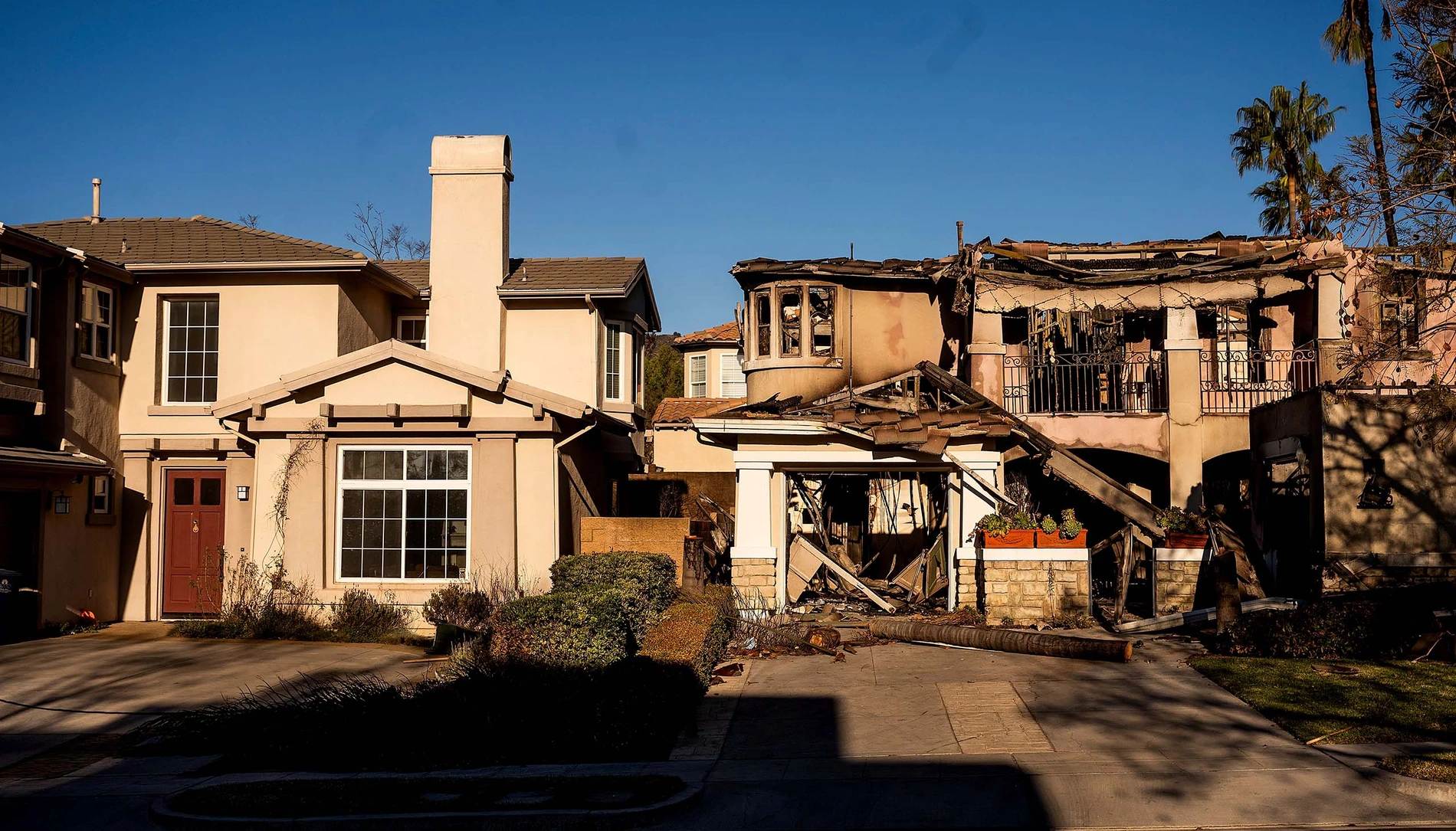
After wildfire damage affects your Washington property, wait for authorities to clear the area, check for immediate hazards, photograph everything you can safely access, report the loss to your insurance company, and arrange emergency restoration when needed. Do not enter an unstable building or disturb widespread ash, soot, or burned debris.
1. Wait Until Authorities Allow You to Return
Follow instructions from the fire department or local emergency-management agency. A restoration company cannot authorize re-entry.
Do not approach the property if you notice:
- Active fire or hot spots
- Downed power lines
- Gas or fuel odors
- Unstable walls, chimneys, or roof sections
- Damaged propane tanks
- Standing water near electrical equipment
For immediate danger, leave the area and call 911 or the appropriate utility provider.
2. Check the Property From Outside
Before entering, walk around the property from a safe location.
Look for:
- Roof or wall movement
- Broken windows and doors
- Burned siding, decks, or trees
- Openings where rain can enter
- Ash around windows, doors, and vents
- Water entering through the roof or walls
- Damaged electrical, gas, or HVAC equipment
Stay outside if the building appears unstable. Structural concerns should be addressed by the appropriate building official, engineer, or other qualified professional.
3. Photograph Everything Before Cleanup
Take photos and videos before moving belongings, wiping surfaces, or making temporary repairs.
Document:
- Every exterior side and affected room
- Fire, smoke, soot, and ash deposits
- Wet walls, ceilings, floors, and insulation
- Damaged furniture, appliances, and electronics
- Business equipment or inventory
- Temporary board-up, tarping, or water removal
Keep receipts, claim numbers, contractor documents, and a record of every insurance conversation. Do not discard damaged property until your insurer provides instructions, unless it presents an immediate safety hazard.
4. Call Your Insurance Company
When should you call?
Call as soon as you are safe and have basic photos of the damage. You do not need a complete inventory before reporting the loss.
If water is spreading or the building is exposed to rain or unauthorized entry, tell the insurer that emergency mitigation may be necessary.
What should you ask?
- What is my claim number?
- What additional documentation is required?
- Can emergency board-up, water removal, or drying begin?
- Do temporary repairs require authorization?
- Should damaged belongings be retained?
- How should contractor estimates be submitted?
- Does my policy include temporary housing or business interruption coverage?
Coverage depends on the individual policy. Good Life Restoration can provide project photos, job records, an itemized restoration scope, and estimates, but we cannot decide what insurance will cover.
Washington residents can find additional guidance from the Washington Office of the Insurance Commissioner.
5. Call a Restoration Company
When should you call?
Contact a restoration company after authorities clear the property and you report the loss to your insurer.
Do not wait for the insurance adjuster when:
- Water needs to be removed
- Wet building materials need drying
- Windows, doors, or roof sections are open
- Soot is spreading through the property
- Smoke odor remains
- Belongings must be moved for restoration
When urgent mitigation is needed, contact the insurer and restoration company as close together as possible. Ask the insurer what authorization is required, but do not allow preventable water or weather damage to continue while waiting for an adjuster’s visit.
What information should you provide?
Tell the restoration company:
- Property address and building type
- Whether access has been cleared
- Areas affected by fire, smoke, ash, or water
- Whether utilities are operating
- Whether the building is occupied
- Whether contents or inventory are affected
- Your insurance claim number, if available
Ask how the affected areas will be documented, what may be restored, what may require removal or replacement, and how the work will be completed.
6. Do Not Spread Ash or Soot
Do not dry sweep ash, use a leaf blower, or wipe soot with ordinary household cleaners. These actions can spread residue and damage surfaces.
For limited ash cleanup, current EPA guidance recommends:
- Keeping children and pets away
- Wearing gloves, protective clothing, eyewear, and sturdy shoes
- Using a properly fitted, NIOSH-approved N95 or P100 respirator
- Damp-wiping light ash from washable surfaces
- Using a HEPA vacuum when appropriate
- Keeping ash out of storm drains
Call a qualified professional when ash is widespread, mixed with burned building debris, present inside the HVAC system, or too extensive to control safely.
7. Address Smoke and Firefighting-Water Damage
Wildfire damage can affect properties that were not directly burned.
Check for:
- Smoke odor in carpet, upholstery, drywall, or wood
- Ash around windows and ventilation openings
- Residue inside HVAC vents
- Wet insulation, flooring, ceilings, or wall cavities
- Water that traveled into rooms below the fire
Do not assume every affected material must be removed. Some surfaces and belongings may be cleaned or restored. The correct approach depends on the material, amount of damage, and expected restoration result.
Keep an affected HVAC system off if soot or ash is visible around the vents.
How Good Life Restoration Can Help
Good Life Restoration team helps property owners understand:
- What needs attention first
- What may be cleaned, dried, or restored
- What may require removal or replacement
- Whether contents should be packed out
- How each restoration stage will be completed
- Whether another qualified specialist is needed
Our confirmed services include:
- Emergency board-up and temporary protection
- Water extraction and structural drying
- Smoke and soot cleanup
- Smoke-odor treatment
- Contents documentation, cleaning, pack-out, storage, and return
- Repairs and reconstruction through licensed trades
- Project photos, moisture records, and itemized documentation
Good Life Restoration does not authorize re-entry, determine structural stability, perform hazardous-material testing, or decide insurance coverage. We explain when the appropriate public authority, engineer, utility provider, environmental professional, or other specialist should be involved.
If your Seattle, Everett, or nearby Western Washington property has fire, smoke, soot, ash, or firefighting-water damage, call Good Life Restoration at (206) 690-9602 or contact our restoration team.